After 8 years, Europe's BepiColombo mission is on final approach to Mercury
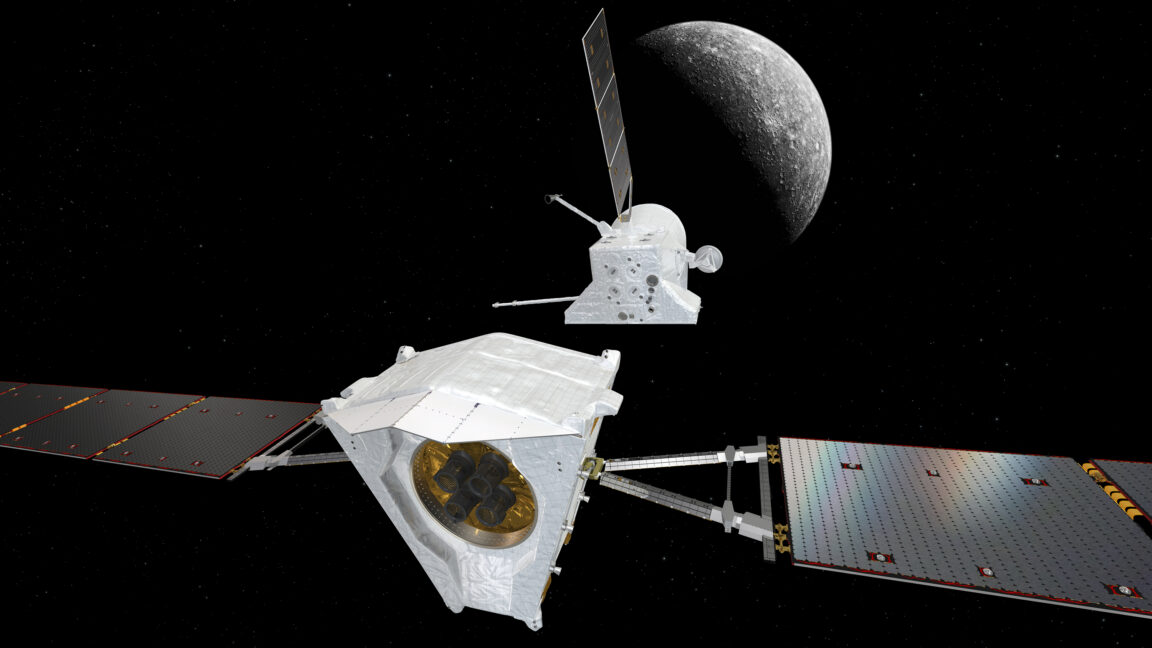
"Fundamentally, we want to learn about the origins of this planet and how it came to be like it is."
The BepiColombo mission, a collaborative effort between the European Space Agency (ESA) and the Japan Aerospace Exploration Agency (JAXA), is finally nearing its destination, Mercury, after an impressive 8-year journey. This mission is significant because Mercury is the least explored planet in our solar system, and scientists are eager to uncover its secrets. By studying Mercury's composition, magnetic field, and geological features, researchers hope to gain insights into the planet's formation and evolution.
The mission's findings will have far-reaching implications for our understanding of the solar system's early days. Mercury's proximity to the sun and unique composition make it an fascinating subject for study. Scientists are particularly interested in understanding the planet's magnetic field, which is surprisingly strong given its small size. By analyzing data from BepiColombo, researchers can gain a better understanding of how Mercury's magnetic field interacts with the solar wind, and how it has changed over time.
As BepiColombo enters Mercury's orbit, the scientific community will be watching closely for the mission's first discoveries. The spacecraft is equipped with a range of instruments designed to study Mercury's surface, subsurface, and magnetic field. To watch next: the initial findings from BepiColombo's orbital insertion, which are expected to provide a wealth of new information about Mercury's geology, magnetic field, and interaction with the solar wind. The mission's discoveries will likely shed new light on the formation and evolution of the solar system, and could have significant implications for future missions to Mercury and beyond.
Originally reported by arstechnica.com. NetNewsletter adds analysis for ai & agent economy readers.